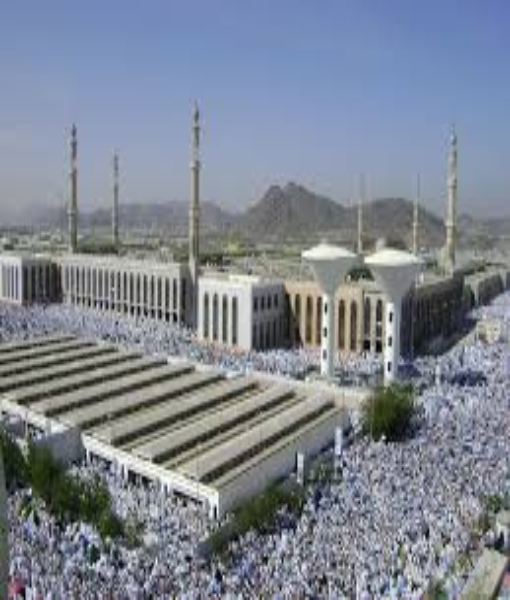
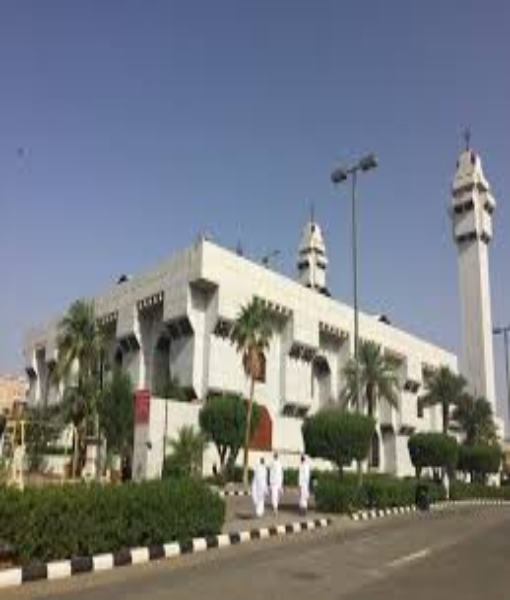
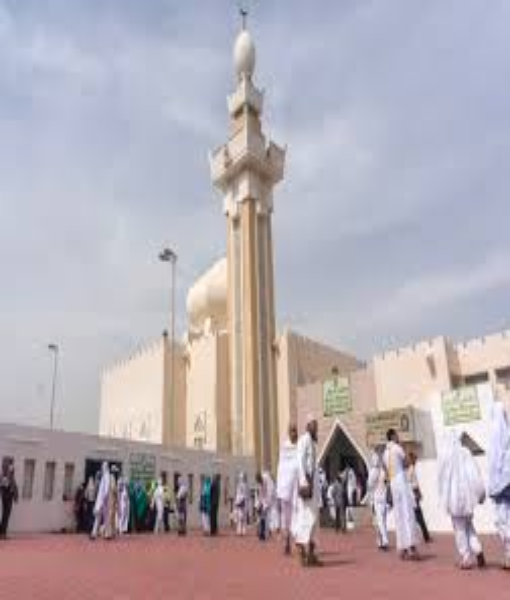
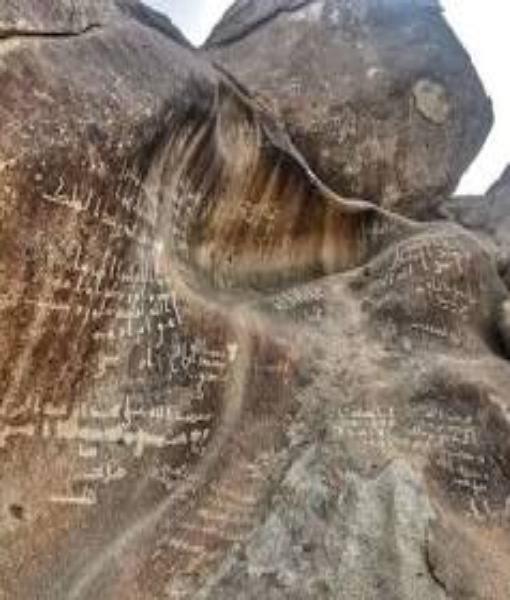
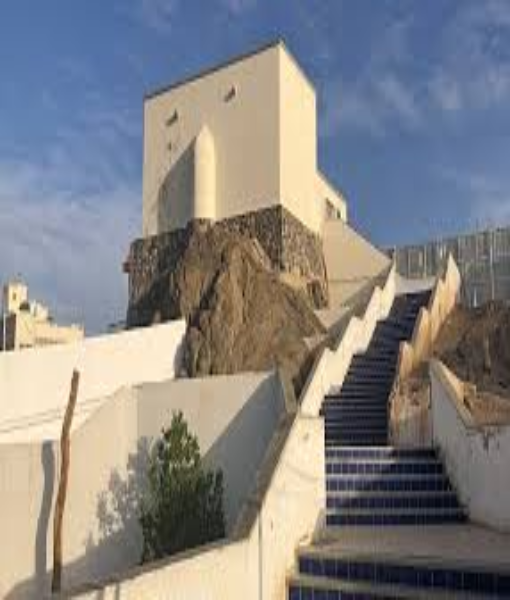
Jabal al-Rahmah (جبل الرحمة) While the Ka’bah is the direction of our prayers, the standing (Wuqūf) at Arafat is the core ritual: as the Prophet Muhammad (S.A.W.) said, “Hajj is Arafat.” Jabal al-Rahmah is the focal point of this essential pillar of Islam, encompassing the universal themes of repentance, completion, and mercy that began with the first prophets and concluded with the final Messenger (S.A.W.).
A Place of Eternal Beginnings and Endings
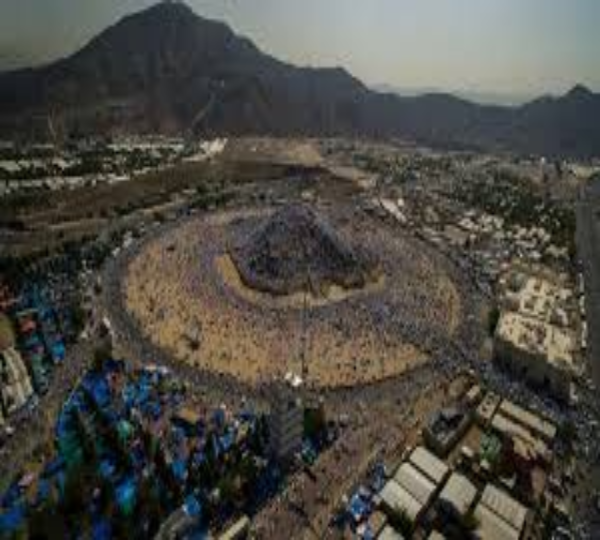
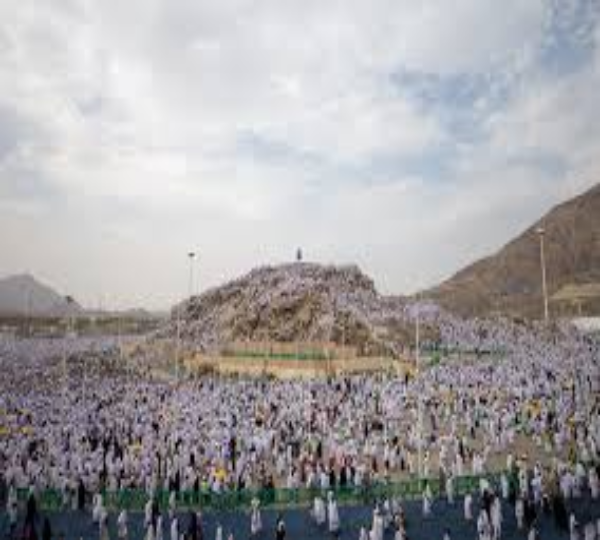
Jabal al-Rahmah is a small, rocky hillock situated on the vast Plain of Arafat, approximately 20 kilometers southeast of the Masjid al-Haram. Its historical significance spans the entire human narrative:
The Meeting of Humanity (Adam and Eve)
One tradition holds that the name Arafat, meaning “to know” or “to recognize,” originates from the belief that it was on this sacred plain that Prophet Adam (A.S.) and Hawa (Eve) were reunited after their descent to Earth and their long period of separation. Their subsequent prayer and repentance were accepted here, making Arafat the original place of Tawbah (Repentance) and Mercy (Rahmah).
The Zenith of Prophethood (The Farewell Sermon)
The most defining moment for the Ummah occurred here during the Farewell Hajj (10 AH / 632 CE). The Prophet Muhammad (S.A.W.) stood on Jabal al-Rahmah—or the elevated position nearby—and delivered his final, comprehensive address to the massive congregation of believers.
The Final Instructions: This Farewell Sermon, following the prayers at Masjid al-Namirah, contained the essence of Islam’s social, economic, and moral framework: emphasizing equality, human rights, the sanctity of life and property, and the abolition of usury.
The Completion of Din: It was here, upon the completion of the sermon and the standing, that the verse was revealed: “This day I have perfected for you your religion and completed My favor upon you and have approved for you Islam as religion.” (Quran 5:3). This divine declaration confirmed that the spiritual mission was complete, sealing Arafat as the site of ultimate perfection.
Guiding the Heart
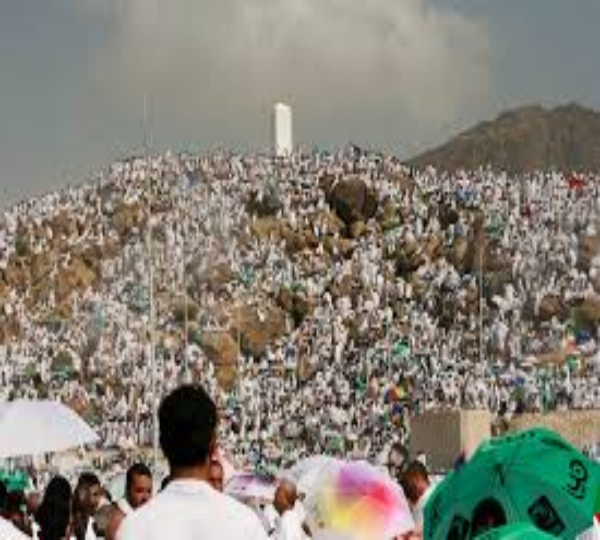
Jabal al-Rahmah is easily recognizable by the white pillar atop its summit.
A Marker, Not a Ritual: While climbing the hill and touching the pillar is not a required ritual of Hajj, the pillar serves an important historical and logistical function: it marks the approximate location where the Prophet (S.A.W.) stood when he delivered his sermon, and it guides pilgrims scattered across the immense plain.
The Focus of Dua: Though standing on the hill itself is not mandatory (the entire Plain of Arafat is the place of Wuqūf), millions of pilgrims naturally direct their gaze and their hearts toward Jabal al-Rahmah, making it the geographical focus of their Day of Arafah supplications.
The Barakah of Forgiveness and Equality
The Barakah associated with Jabal al-Rahmah is unrivaled, focusing entirely on forgiveness and spiritual renewal.
The Day of Freedom from Fire: The Prophet (S.A.W.) said, “There is no day on which Allah frees more people from the Fire than the Day of Arafah.” This blessing covers every pilgrim present, urging them to spend every moment of that afternoon in tearful supplication, seeking pardon for the previous year and the coming year.
A Symbol of Equality: Standing on the vast plains—shoulder-to-shoulder, regardless of status, race, or wealth, all clothed in the simple Ihram (a stark contrast to the historical commerce of Souq Okaz)—is the most profound visual manifestation of the equality preached in the Prophet’s (S.A.W.) Farewell Sermon
The Call to Contemplation
While Umrah does not include the Wuqūf at Arafat, visiting the area, especially in conjunction with Masjid al-Namirah, is essential for spiritual connection:
Seeking Mercy: The Ziyarat to Jabal al-Rahmah is a powerful moment to internalize the concept of Tawbah (repentance) and Divine Mercy. The simple fact that the Prophet (S.A.W.) chose to spend the peak moments of the Hajj in intense Dua on this hill highlights the central importance of supplication in a believer’s life.
Final Instructions: It is a perfect place to reflect on the Farewell Sermon and the practical duties it laid out, confirming that every aspect of the Prophet’s (S.A.W.) life, from the purity of Bir Tuwa to the final sermon here, was an act of guidance.
Jabal al-Rahmah is the Mountain of Mercy, a sacred hill that stands as a timeless testament to Allah’s (S.W.T.) boundless capacity for forgiveness and the ultimate spiritual destiny of the Muslim Ummah.
Other Ziyarat You Should Know
MAK - 02
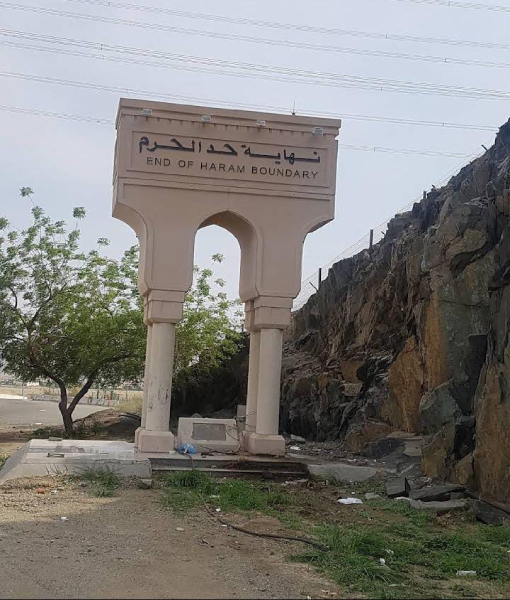
Ansab Al-Haram
MAK - 03
Souq al-Majaz
MAK - 04
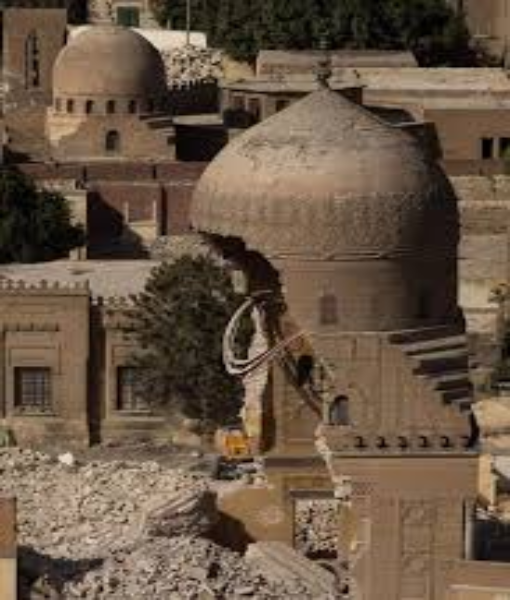
Maqbara al-Shubaikah, Makkah
MAK - 05
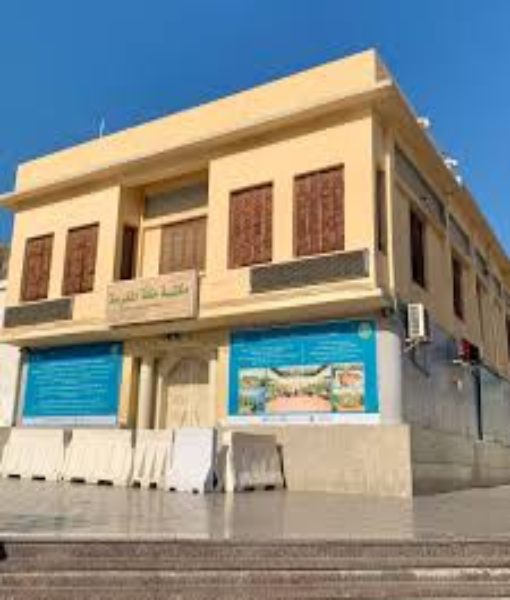
Makkah Al-Mukarramah Library
MAK - 06
Masjid al-Shajarah
MAK - 07
Masjid al-Jinn
MAK - 08
Grave of Sayyeda Khadija (r.a.)
MAK - 09
Masjid al-Ijabah
MAK - 10
Bir Tuwaa
MAK - 11
Masjid al-Bayah or Masjid al-Uqbah
MAK - 12
Masjid al-Kheif - Mina
MAK - 13
Masjid al-Kabasha
MAK - 14
Masjid al-Namirah
MAK - 16
Masjid Taneem (Masjid Sayyeda Aisha)
MAK - 17
Masjid al-Jiranah
MAK - 18
Inscriptions in Wadi al Usaylah
MAK - 19
Masjid Hudaybiah
MAK - 20
Well of Hudaybiah
MAK - 21
Exhibition of the Two Holy Masjid Architecture
MAK - 22
Grave of Umm al-Mumineen Sayyeda Maymunah (R.A)
MAK - 23
Masjid al-Fath - Al-Jumum
When nothing prevents our to we like best, every pleasure to be.